
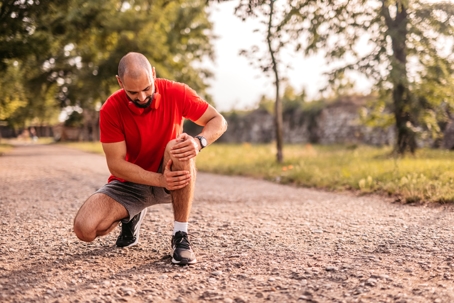
While every sport places unique demands on the body, sports-related injuries tend to follow predictable patterns. Certain joints and tissues are repeatedly stressed across nearly all athletic activities, making them especially vulnerable when strength, mobility, or control is lacking.
Understanding **where injuries commonly occur—and why—**helps athletes recognize early warning signs, seek appropriate care, and avoid long-term setbacks. Physical therapists are trained to identify these regional injury patterns and address the underlying movement issues that contribute to them.
In this blog, we’ll break down the most common sports injuries by body region, explain how they occur, and highlight how physical therapy plays a critical role in recovery and prevention.
Ankle Injuries
Why the Ankle Is Vulnerable
The ankle is one of the most frequently injured joints in sports due to its role in: weight-bearing, rapid direction changes, jumping and landing, or uneven surfaces.
Sports such as basketball, soccer, football, trail running, and volleyball place especially high demands on ankle stability.
Common Ankle Injuries
- Lateral ankle sprains
- High ankle sprains
- Achilles tendinopathy
- Peroneal tendon injuries
Ankle sprains are often dismissed as “minor,” but inadequately rehabilitated ankle injuries are a leading cause of chronic instability and re-injury
How Physical Therapy Helps
Physical therapy focuses on: restoring range of motion, strengthening stabilizing muscles, improving balance and proprioception and correcting faulty landing mechanics.
PT reduces the likelihood of repeat sprains and improves confidence during sport-specific movements.
Knee Injuries
Why the Knee Is at Risk
The knee sits between two highly mobile joints—the hip and ankle—making it especially sensitive to poor movement mechanics above or below it.
Common Knee Injuries
- ACL tears
- Meniscus injuries
- Patellofemoral pain syndrome
- Patellar tendinitis
- Iliotibial (IT) band syndrome
Knee injuries are common in sports requiring cutting, pivoting, and jumping, such as soccer, basketball, skiing, and football.
Key Contributing Factors
- Weak hip muscles
- Poor landing mechanics
- Sudden deceleration
- Training load errors
How Physical Therapy Helps
Physical therapy for knee injuries emphasizes: hip and core strengthening, neuromuscular control, jump-landing retraining, and gradual return-to-sport progressions.
For both surgical and non-surgical cases, PT is essential for long-term knee health.
Hip and Groin Injuries
Why Hip Injuries Are Increasing
As sports have become faster and more dynamic, hip and groin injuries have increased, particularly in soccer, hockey, and running sports.
Common Hip and Groin Injuries
- Hip flexor strains
- Adductor (groin) strains
- Labral injuries
- Femoroacetabular impingement (FAI)
Hip injuries often develop gradually and can refer pain to the groin, thigh, or lower back, making diagnosis challenging.
How Physical Therapy Helps
Physical therapy addresses: hip mobility deficits, core and pelvic stability, running and cutting mechanics, load tolerance of hip musculature
Early PT intervention can often prevent the need for more invasive treatment.
Shoulder Injuries
Why the Shoulder Is Prone to Injury
The shoulder sacrifices stability for mobility, making it highly dependent on muscular control rather than bony support.
Overhead athletes—such as swimmers, baseball players, tennis players, and CrossFit athletes—are especially vulnerable.
Common Shoulder Injuries
- Rotator cuff tendinopathy or tears
- Shoulder impingement
- Labral tears
- Shoulder instability
Shoulder pain is frequently related to overuse rather than trauma, particularly when training volume increases rapidly.
How Physical Therapy Helps
Physical therapy emphasizes: rotator cuff strengthening, scapular (shoulder blade) control, postural correction, and sport-specific throwing or overhead mechanics.
PT often resolves shoulder pain without the need for injections or surgery.
Elbow and Wrist Injuries
Common Elbow and Wrist Injuries
- Tennis elbow (lateral epicondylitis)
- Golfer’s elbow (medial epicondylitis)
- Wrist tendinitis
- Ligament sprains
These injuries are common in racket sports, baseball, climbing, and weightlifting.
How Physical Therapy Helps
Treatment includes: progressive loading of tendons, grip strength development, technique refinement and equipment modifications when necessary.
Tendon health requires appropriate loading—not rest alone.
Spine and Lower Back Injuries
Why Spinal Injuries Are So Common
The spine plays a central role in nearly every athletic movement, transferring force between the upper and lower body.
Common Spine-Related Injuries
- Muscle strains
- Disc irritation
- Facet joint pain
- Stress injuries (especially in young athletes)
Lower back pain is one of the most common reasons athletes seek physical therapy.
How Physical Therapy Helps
Physical therapy focuses on: core stability, hip-spine coordination, postural awareness, andload management.
Most spine-related sports injuries respond extremely well to conservative care.
Red Flags Athletes Should Not Ignore
While many aches are normal, certain symptoms require prompt evaluation:
- Persistent swelling
- Night pain
- Joint locking or instability
- Sharp pain with specific movements
- Pain that worsens despite rest
Physical therapists are trained to identify when referral for imaging or medical evaluation is needed.
Why Location Matters—but the Whole Body Still Counts
One of the most important concepts in sports physical therapy is that pain location is not always the problem location.
For example:
- Knee pain may stem from hip weakness
- Shoulder pain may originate from poor thoracic mobility
- Ankle injuries may reflect balance or core deficits
This whole-body approach is what makes physical therapy uniquely effective.
Contact our team at Lifestyle Physical Therapy to learn more!